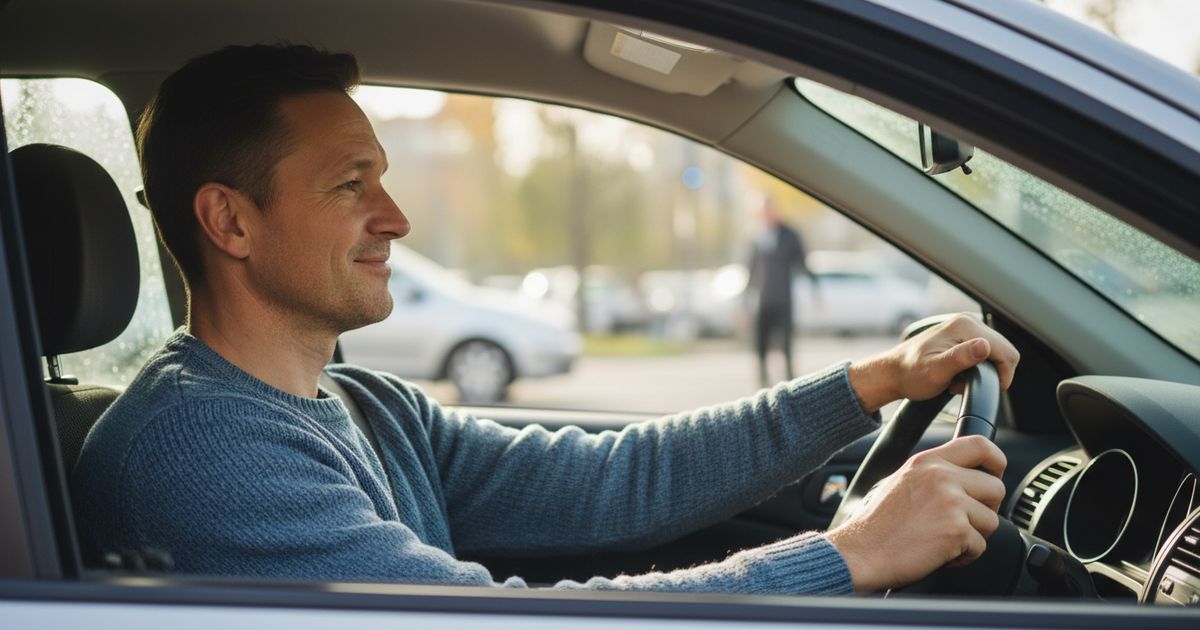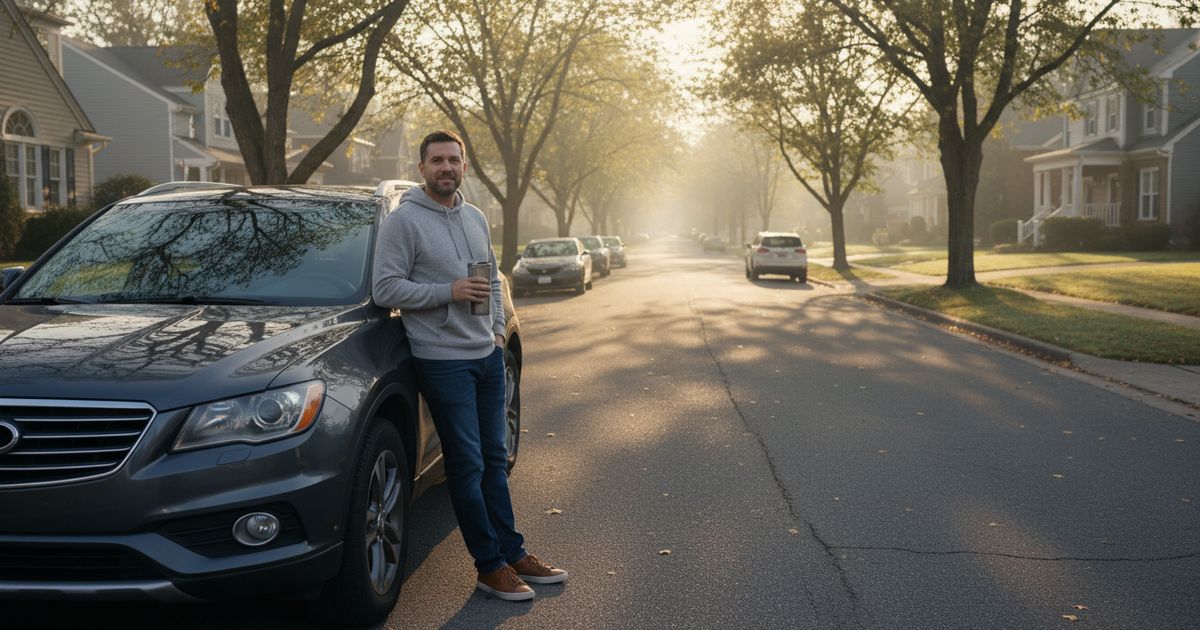
This is a fictional story with invented characters, written to show how carpooling can work. It is not a customer testimonial.
In an earlier story, an invented commuter named Daniel found ride partners and began sharing his drive to the office. This is what happens a few months later. Daniel never planned to build a carpool group. He simply started talking about his mornings at work, and a small group grew from there. If you want the practical version of the same idea, read how to start a workplace carpool.
It began with a lunch-table conversation
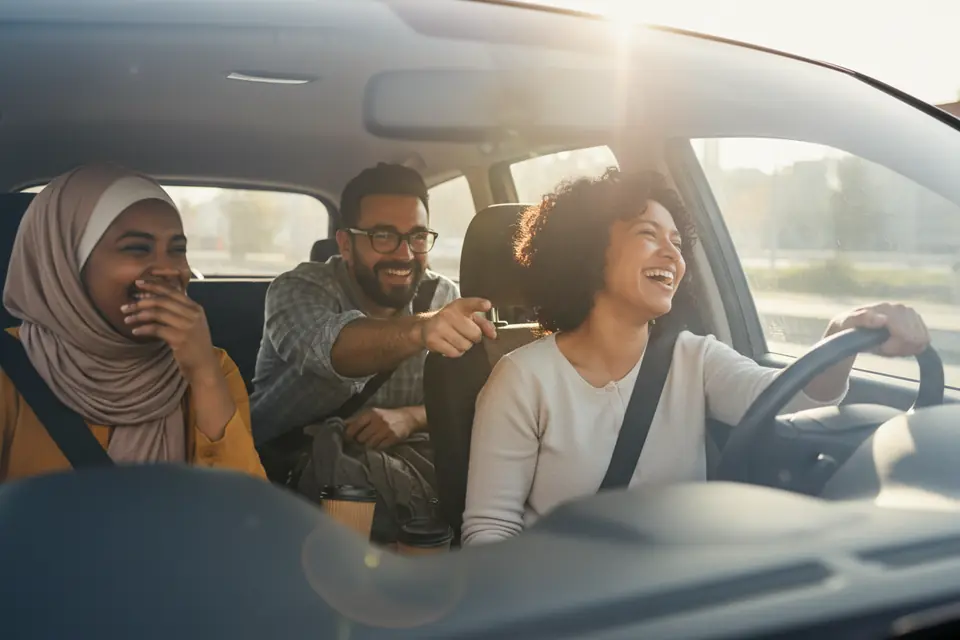
By the fall, Daniel's shared rides had become routine. One day at lunch a coworker, Priyanka, complained about her parking bill and the freeway merge near the office. Daniel mentioned that he had been carpooling and that it had made his mornings calmer. He did not give a sales pitch. He said what the routine looked like, what time he left and where he picked people up.
That word-of-mouth approach worked better than any announcement would have. Priyanka asked a few practical questions: how does she know the driver, what happens if she needs to cancel, how does payment work. Daniel pointed her to the app. She downloaded it, searched for his Monday ride and booked a seat. Nobody had to be convinced of anything. She could see the route, the driver and the price per seat for herself before she confirmed.
Two coworkers join, and one starts driving
A week later a second coworker, Marcus, heard about it from Priyanka and booked a seat too. Daniel's car now held three people on Mondays and Wednesdays, which suited everyone.
The surprise came in November. Marcus lived close to Daniel but kept a different schedule, and he decided to offer his own ride on Tuesdays and Thursdays. He tapped Offer a ride, entered his route, time and vehicle, chose how many seats to offer, and picked a price under the cap shown in the app. Daniel and Priyanka booked him on those days. A small group became a small network, with two drivers and three people who could move between them. That is how a workplace carpool often grows: slowly, through people who already know each other.
Scheduling that kept it simple
With more people involved, the group settled on a few habits. These are fictional, but they are the kind of habits that tend to keep a carpool steady.
- Fixed days. Each driver kept the same days each week, so riders could plan around them.
- A set pickup point and time. They agreed on a corner and a departure time, and the driver left a minute or two after it, not ten.
- Chat for changes. Any delay or cancellation went through in-app chat, so nobody had to share a personal phone number.
- A back-up plan. Everyone knew they could search for another ride or drive themselves if something fell through.
For anyone building a weekly pattern, the weekly commute planning guide has more ideas.
What went wrong once, and how they fixed it
In December, Priyanka was a few minutes late to the pickup corner, on a morning when Daniel had an early meeting. He waited, then left, and she arrived at the corner to an empty curb. Both felt bad. Daniel worried he had been rude and Priyanka felt she had let the group down.
The fix was not complicated, and it did not involve blame. They talked it through over coffee and agreed on three small rules. First, riders message in the chat if they are running more than a couple of minutes behind. Second, the driver waits a fixed, agreed amount of time and then leaves, so no one is left guessing. Third, a rider who misses a ride simply finds another one or drives that day, with no hard feelings. They also agreed that the first message of the morning would be a quick "on my way." Nothing dramatic, but the problem never came back.
This is a common pattern in shared rides. The mistakes are usually about unspoken expectations, and the repair is usually to say them out loud. The etiquette dos and don'ts cover this kind of thing in more detail.
What to take from this story
- Word of mouth is enough. Describe your routine honestly and let coworkers look at the ride in the app themselves.
- Start small, and let others offer their own rides when they are ready.
- Agree on pickup time, waiting time and how to message about delays before the first problem.
- When something goes wrong, talk about the process, not the person.
Frequently asked questions
Do my coworkers need to be in the same department?
No. Anyone heading the same way at similar times can book a ride. In this story the group simply shared a route and an office.
How do coworkers find my ride?
You can tell them about it directly, and they can search for it in the app using their pickup, drop-off and time. They check the route, driver and price before they confirm.
What if someone cannot make a ride?
Use in-app chat to let the driver know as early as you can. If a paid booking is cancelled before the ride starts, what you paid returns to your wallet.
If you drive to work and have a free seat or two, you could be the Daniel of your own office. Download the app, offer a ride on your usual route, and see who is heading your way.
Ready to carpool?
Download ShareSpace Carpool, free on iPhone and Android.