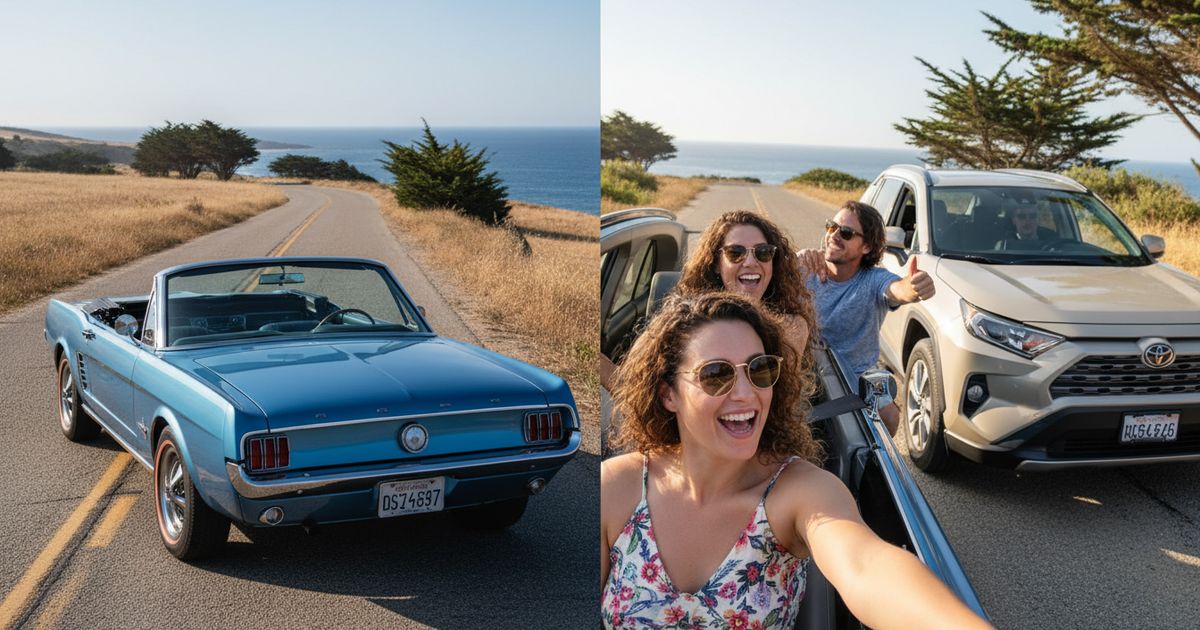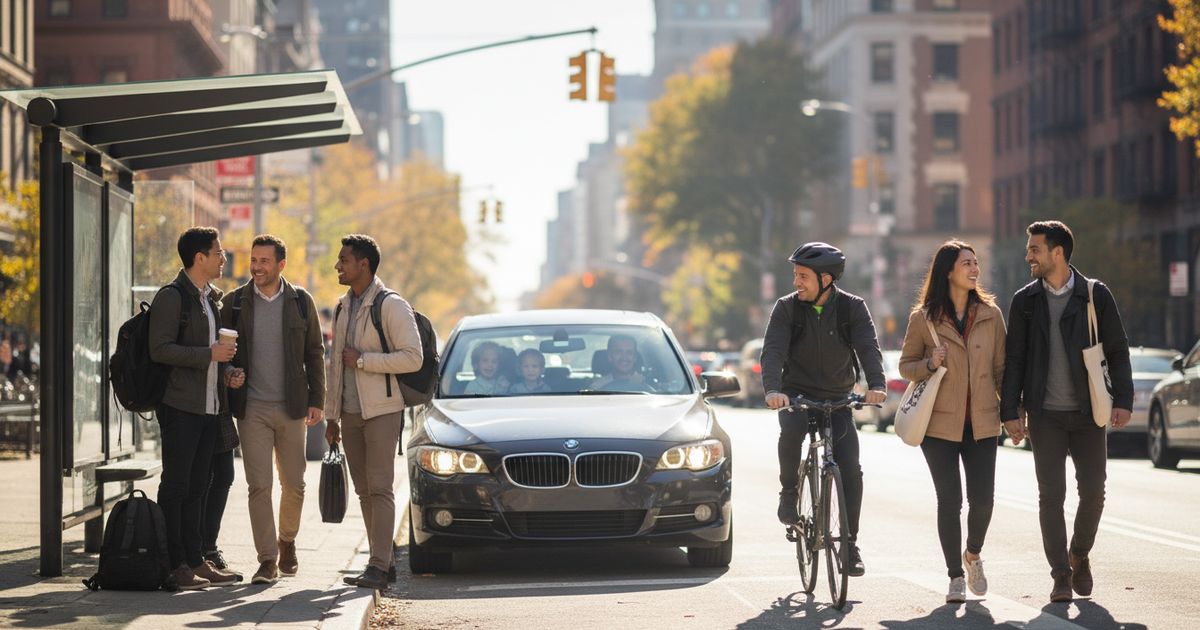
Every commute choice trades something for something else. Driving alone buys freedom and costs money. Transit can be cheap and calm but runs on someone else's schedule. Rideshare is convenient and priced per trip. Carpooling splits a drive that is already happening, and asks you to coordinate. This post compares the four by category, without quoting numbers we cannot back up, so you can decide which fits your own week.

How the four options differ in cost structure
The shape of the cost matters more than any single price tag, because it determines what you pay on a light week versus a heavy one.
- Driving alone: you carry the whole cost of the trip, including fuel, wear, insurance, parking and tolls where they apply. Much of it is fixed whether or not you drive that day.
- Rideshare and taxi: you pay a fare per trip, which covers the driver's time and the service as well as the vehicle. The cost scales with every ride you take.
- Public transit: usually a fare or pass. Where service is good, this can be the lowest recurring cost, but it depends heavily on your city and your route.
- Carpooling: the people riding help cover the cost of a trip the driver was making anyway. For the passenger, the price is typically a share of that trip; for the driver, it can offset some of the cost of the drive.
If you want to see your own numbers, our commute cost worksheet walks through the real cost of driving.
Time, flexibility and reliability
Driving alone is the most flexible option. You leave when you want, stop where you want and change plans freely. Your time is exposed to traffic and parking search.
Rideshare is flexible in timing and removes parking, but the wait for a vehicle and the trip duration vary with demand and traffic in your area.
Transit is predictable where service is frequent and dedicated lanes or rails avoid traffic. It is less flexible: you adapt to the timetable and to transfers, and a missed connection can cost real time.
Carpooling sits in the middle. You agree a pickup point and time with the driver, so you give up some spontaneity. In return you may use shared-vehicle lanes where your area has them, and you often skip parking on your own. Reliability depends on the people involved, which is why a backup plan matters.
Stress, comfort and environmental footprint
Stress is personal. Some people find driving relaxing and a train a chore; others feel the reverse. Driving alone gives you control and privacy but puts all the attention load on you. Transit and passenger seats let you read, rest or answer messages. Carpool passengers get that time back, while carpool drivers still drive but may share the experience of the trip with company.
On footprint, the basic logic is about vehicles on the road. The EPA estimates that a typical passenger vehicle emits about 400 grams of CO2 per mile. When two people share one car instead of driving two, one fewer vehicle makes that trip, so the emissions of that stretch are spread across more people. Transit can have a low footprint per rider when vehicles are well used, and a nearly empty bus or train is a different story. Rideshare adds the empty miles a driver may travel between fares. For more detail see our post on carpooling's environmental impact.
When each option makes sense
- Driving alone makes sense when your schedule is unpredictable, you carry equipment, you make several stops, or no one shares your route.
- Rideshare makes sense for occasional trips, late nights, airport runs on short notice, or days when you cannot drive.
- Transit makes sense when your home and workplace are both near frequent service and the trip time is reasonable.
- Carpooling makes sense for regular trips with a predictable time, when someone near you travels a similar route, or for a long drive where sharing the cost is meaningful.
Many people mix them. A common pattern is carpooling on set days, transit on others, and a rideshare as the fallback when plans change.
Where carpooling is a poor fit
Carpooling is not for every situation, and it is better to say so plainly.
- Your hours change daily or you often leave on short notice.
- You need to make several errands or school runs on the way.
- Few people live or work along your route, so there is nothing to match.
- Your trip is short and your area has frequent transit that already suits you.
- You strongly value privacy and quiet in the commute.
It also depends on other people turning up. If a driver cancels, you need an alternative. That is a real cost of sharing, and part of the reason some riders keep a transit or rideshare option in reserve. For the practical side of setting expectations, see carpool etiquette.
Frequently asked questions
Is carpooling cheaper than rideshare?
Often it can be, because a carpool shares the cost of a trip rather than charging a fare for a service. The difference depends on your route, your area and how the ride is priced, so compare using your own trip.
Is public transit the cheaper choice every time?
Not necessarily. Where service is frequent and covers your route, it may well cost less. Where it is sparse or needs transfers, the time cost can outweigh the savings, and carpooling or driving may suit better.
Can I combine these options?
Yes. Many commuters carpool on regular days and keep transit or rideshare as a backup. Using different tools for different days is a sensible way to handle changing schedules.
If your regular trip is one that a neighbor or coworker also makes, carpooling may be worth a try. Download ShareSpace Carpool, search for a ride along your route, and see what a shared commute looks like in practice.
Ready to carpool?
Download ShareSpace Carpool, free on iPhone and Android.