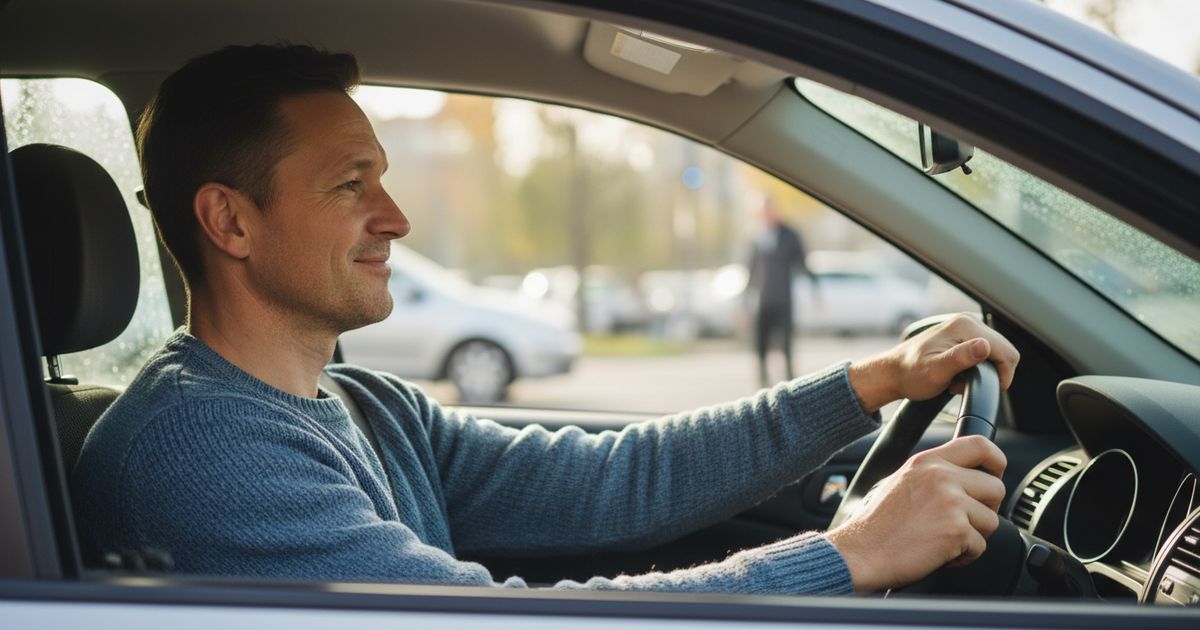
This is a fictional story with invented characters, written to show how carpooling can work. It is not a customer testimonial.
Priya is an invented software developer who works at an office about 18 miles from her apartment. She used to arrive tired, with a tight jaw from the freeway and a head full of other drivers' decisions. This story follows how she found a ride partner named Leo, how they shared the ride and its cost, and how they handled the small bumps that every regular carpool meets. Figures are hypothetical.

Looking for a ride partner
Priya did not own a car she wanted to drive every day, and a coworker had mentioned carpooling. She downloaded ShareSpace Carpool, signed in, and used Search on Home. She entered her pickup, drop-off, one seat and a departure time around 8:00. The results listed cards with the departure time, the price per seat, how far she would walk to pickup and from drop-off, the driver and the seats left. She used the chips to sort by closest first.
One ride stood out. It was offered by a driver named Leo, who left a few blocks from her apartment and arrived at a building next to her office. She opened the ride to see the route, the driver and the vehicle, checked his rating and verified badge, and looked at the total above the Confirm button. Then she chose how she would pay and confirmed. If you are new to riding, how to use ShareSpace Carpool as a rider covers each step.
Sharing the ride and the cost
On the first morning, Priya asked for the ride start code at pickup, and shared it with Leo to confirm she was in the right car. They kept the first conversation light: where they lived, what they did, how long they had commuted. The ride took about 35 minutes.
The money side was simple. Leo had set a price per seat that was capped to the shared cost of the trip. For example, suppose the seat price was $4 each way. Priya would then spend $4 x 2 = $8 a day, or $8 x 5 = $40 across a full week, and Leo's costs would be reduced by what riders paid. Compare that with her own invented figure of $11 a day for fuel and wear, which is $55 a week. The difference in this example is $55 - $40 = $15. That is only an illustration, and your own result depends on your car, route and the price the driver sets. For more on payment options, see how to pay for a carpool ride.
Arriving relaxed
The biggest change for Priya was not the fifteen dollars. It was the first hour of her workday. She used to arrive wired and a bit irritated. As a passenger, she spent the ride looking over her calendar, answering a message or two, or simply watching the road go by without having to manage it. She walked into the office feeling closer to ready than rattled. A commute you do not have to drive can feel like a short, quiet buffer between home and work. The commute stress and wellbeing post looks at this more broadly.
Handling a late morning
About a month in, Priya overslept after a late release at work. At 7:55 she was still brushing her teeth. Here is what she did, and what a good rider can do in the same spot.
- She messaged Leo in the in-app chat right away, saying she was running about ten minutes late, rather than hoping he would not notice.
- She offered Leo a choice: wait a few minutes, or go without her. She did not assume he would wait.
- Leo had a meeting and said he could wait five minutes, no more. Priya said that was fair.
- When it became clear she could not make it, she told him straight away so he could leave. She then searched for another ride and took a later one.
Nobody was angry. They agreed afterward on a simple rule: five minutes of grace, and a chat message if it is going to be longer. That is the kind of agreement that saves a carpool from slow resentment.
Taking turns and saying thanks
As the months went on, the two of them sometimes talked about who drives and who rides, and how to swap when one of them had a day off or a changed schedule. They kept it flexible and open, and checked in whenever plans changed, so nobody felt locked into anything.
Priya also made a habit of thanking Leo, because small courtesies keep a ride warm. She said thanks at drop-off, once brought him a coffee, and left a good rating after rides, which helps everyone. Leo thanked her for being on time. For a broader list, see carpool etiquette dos and don'ts.
What to take from this story
- Sort search results by closest pickup if walking distance matters to you.
- Check the driver's rating and verified badge, and use the start code at pickup.
- If you are late, message early and let the driver decide whether to wait.
- Agree on a grace period and a plan for swapping roles before you need them.
- A simple thank-you goes a long way.
Frequently asked questions
What if I cannot find a ride on my route?
You can tap Request a ride, or set up Repeat daily as rider so you are matched with rides on your regular commute.
Are Priya and Leo real people?
No. They are fictional, and the numbers in the story are hypothetical examples with the arithmetic shown.
Do I have to share my phone number with the driver?
No. In-app chat lets you coordinate without sharing your number.
If you want a calmer start to the workday, try the app. Search for a ride on your commute, or offer one, and find your own Leo.
Ready to carpool?
Download ShareSpace Carpool, free on iPhone and Android.